2026-11-05
Changing Trends in Rhinoplasty Revision Implants: A New Option with Autologous Rib Cartilage?
As revision rhinoplasty cases rise, autologous rib cartilage implants like RIBFit are drawing attention as a biocompatible alternative to silicone, according to Kowon Plastic Surgery.
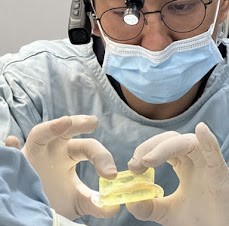
A growing number of patients are considering revision rhinoplasty because of side effects such as inflammation or contracture (capsular contracture) after their first nose job. However, when repeated surgeries have left the nasal tip short or stiff, many patients also feel psychologically burdened by artificial implants such as silicone. As a result, interest in biocompatible implants that can replace conventional ones is gradually growing.
Dr. Kim Hyung-taek, director of Kowon Plastic Surgery in Gangnam, explained, “Revision rhinoplasty is far more difficult than primary surgery, because tissue damage or scar tissue has often already formed. That is why functional recovery and stability of the tissue must come first, not just improving the shape. At our clinic, we closely analyze the inside of the nose with a precision diagnostic system and provide personalized revision solutions to help patients recover safely.”
Recently, ‘RIBFit,’ which uses autologous rib cartilage, has been adopted as one way to replace artificial implants.
Dr. Kim explained, “RIBFit is a method in which the patient’s own rib cartilage is processed into fine particles (autologous rib cartilage particles), then compressed and used as an implant. Because autologous tissue has high biocompatibility, it is considered relatively stable with regard to inflammation, rejection, and contracture, which are the drawbacks of conventional silicone, and it is also regarded as addressing the artificial stiffness.”
He added, “With autologous dermis rhinoplasty, which has been used in place of silicone, the absorption rate after surgery varies from patient to patient, so there were variables in predicting results. It has also been pointed out that the results can look somewhat blunt rather than sleek. RIBFit, which uses autologous rib cartilage, has a low absorption rate and can create a high, defined shape like silicone, so patients can expect more consistent results and a sleeker form.”
For patients who have repeatedly shown rejection or inflammation in response to artificial implants such as silicone, using autologous tissue can be an option that eases both the psychological and physical burden.
Dr. Kim explained, “RIBFit can also be used to lengthen a nose that has become short due to contracture while creating a smooth line along the bridge of the nose, so it is often considered as a way to replace artificial implants in many respects.”
He went on to stress, “However, revision rhinoplasty is a field in which individual differences, such as the amount of remaining tissue, skin thickness, and degree of inflammation, play a major role. Rather than relying on well-known reviews or low prices, the way to avoid yet another revision is to build a surgical plan that suits you through a thorough consultation with a medical team experienced in using autologous tissue.”
<Dr. Kim Hyung-taek, Kowon Plastic Surgery, Gangnam>
Reporter Eunji Kim [email protected]
Source: Medisobizanews (http://www.medisobizanews.com)