2026-11-05
Kowon Plastic Surgery's Dr. Kim Hyung-taek: “Nasolabial Angle Correction Is Done Together With Rhinoplasty, Without Implants… the Raised Nose Blends Naturally With the Face”
Dr. Kim Hyung-taek of Kowon Plastic Surgery says nasolabial angle correction should be part of rhinoplasty, using the patient's own tissue and cartilage rather than implants.
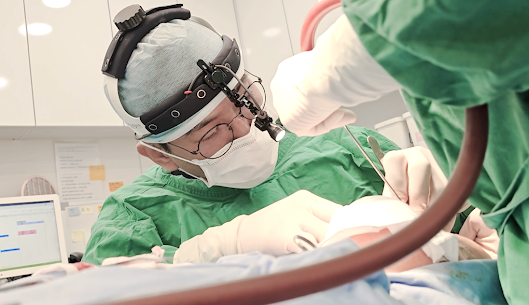
The nasolabial angle (鼻脣角), the angle formed between the nose and the upper lip, is drawing attention as a key factor in how natural a rhinoplasty looks. Surgery that focuses only on raising the nose often leaves the side profile looking awkward, so there has been a growing emphasis recently on three-dimensional planning that takes the nasolabial angle into account as well.
A nasolabial angle of roughly 90–95 degrees for men and 95–100 degrees for women is generally considered balanced. If the angle is too narrow, the tip of the nose can look droopy. If it is too wide, the nostrils can look upturned and the overall impression can seem unnatural.
Dr. Kim Hyung-taek of Kowon Plastic Surgery sees the key to nasolabial angle correction as "integrated planning carried out together with rhinoplasty, rather than a standalone procedure." Dr. Kim explained, "The secret to a natural result is not to treat nasolabial angle correction as a separate procedure, but to adjust the balance of the tip cartilage, the septum, and the structures around the upper lip as part of treating the nose as a whole."
Kowon Plastic Surgery particularly emphasizes that it does not use separate implants when correcting the nasolabial angle. "We don't add an implant to create the angle. Instead, during the rhinoplasty, we reposition the patient's own tissue and cartilage structure so that the nasolabial angle forms naturally," Dr. Kim said. "This reduces concerns about a foreign-body sensation or an unnatural look, and the line stays stable over time."
Nasolabial angle correction matters because of how well the nose blends with the face. A nose that has only been raised may look well defined from the front, but from the side the flow between the nose and lips can look unnatural, which can actually leave an awkward impression. "When the nasolabial angle is matched along with the height of the nose, the raised nose connects smoothly to the upper lip and harmonizes with the face as a whole," Dr. Kim explained. "In the end, the result isn't a nose that looks 'obviously done,' but one that blends in as though it had always been part of that face."
To achieve this, Kowon Plastic Surgery carries out customized planning after a precise analysis of each patient's nasal structure, facial proportions, and side profile before surgery. "Even with the same nose, the ideal nasolabial angle differs depending on its proportions with the forehead, lips, and chin," Dr. Kim said. "You have to consider not only the front view but also the side view and how the face moves when smiling to achieve truly natural results."
However, because the results of rhinoplasty, including nasolabial angle correction, can vary with each person's anatomy and recovery process, a thorough consultation and precise diagnosis before surgery are essential. Dr. Kim added, "Rather than forcing the angle wider, the most important thing is to find the balance point that suits that person best."
Source: Medical Today Health