2026-11-08
Bulbous Nose Correction: Before and After Alar Base Reduction, from Nasal Bridge to Tip
A Kowon Plastic Surgery case in which a bulbous nose was corrected by balancing the nasal bridge, tip, alar wings, and columella, with incisional alar base reduction.

Hello, this is Dr. Kim Hyung-taek of Kowon Plastic Surgery.
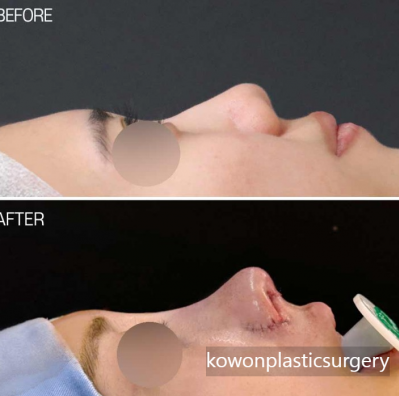
The case I'd like to share today involved a low nasal bridge, which left the nose with little presence on the face, and a bulbous nose shape in which the tip looked spread out to the sides. In addition, the alar wings drooped downward, and the columella was short and low, so the alar wings looked even more prominent.
With this kind of structure, simply raising the nasal bridge or refining only the tip may not be enough to achieve an overall improvement.
When I perform surgery, I don't look at the position and shape of the nasal tip, alar wings, and columella separately. Instead, I focus on how they influence one another and balance the lower part of the nose as a whole.
First, I built the nasal bridge to an appropriate height that suits the proportions of the whole face, so the nose could anchor the center of the face. For the tip, I combined tip cartilage repositioning, tip cartilage suturing, and removal of soft tissue from the nasal tip to tidy up the portion that had spread outward and refine it into a sleeker, cleaner shape.
In addition, I placed support struts between the tip cartilages to reinforce the structural strength of the tip. This step helps reduce the tip spreading out again after surgery and secures enough support so the shape we create stays stable.
Rather than correcting the short, flattened columella on its own, I reinforced the supporting structure and adjusted the positional relationship between the tip and the alar wings together. Balancing it with the surrounding structures prevents the tip from being overemphasized and helps create a natural-looking shape.
Before and after side-profile photos of a nose. The after photo, taken lying down, shows red marks around the nostril.
In particular, the drooping alar wings were corrected in consideration of their relationship with the columella. Through alar lift, I smoothed out the drooping area and balanced the proportion between the tip and the alar wings. As a result, the heavy, stuffy look of the nose was noticeably reduced overall.
The wide alar base was reduced using incisional alar base reduction, narrowing both sides evenly. Because this method involves directly removing skin and soft tissue, it can help narrow the width of the alar base on each side more clearly. This change is an important part of evaluating the overall shape of the alar base. When comparing before and after alar base reduction surgery, it is important to check not only the change in width but also the ratio to the nasal tip.
However, since this method involves incisions, the scarring and swelling at the incision sites need to be carefully monitored in the early postoperative period. Skin characteristics and recovery speed vary from person to person, so rather than setting a fixed timeline, it is important to manage recovery by thoroughly monitoring the progress.
As a result, the nose regained the sense of presence it had lost when it looked low and wide, and the positions and proportions of the nasal tip, alar wings, and columella were organized into a more harmonious whole. When I explain before-and-after alar base reduction results, I look at how the balance of the entire nose has changed rather than simply comparing the size of the alar base. In this case as well, harmonizing the overall structure led to a clearer, more refined impression.
[Another Reference Case]
This is a case of a male patient with a bulbous nose that presented with a low nasal bridge, a wide-looking nasal tip, and flared alar bases. In particular, his nasal bridge was low from the glabella downward and his skin was relatively thick, so the nose appeared wider and duller from the front.
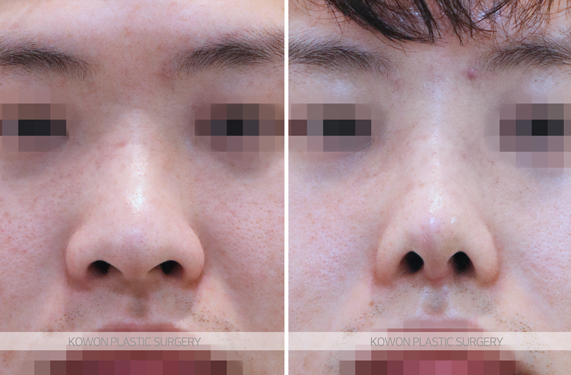
Side-by-side front views of a man's nose for before-and-after comparison, with the eyes and mouth pixelated.
For surgery, I added height to the nasal bridge using silicone, and reinforced the length and support of the nasal tip using septal cartilage and ear cartilage. In addition, I performed removal of the depressor septi nasi muscle and a slight correction of the dorsal hump on the bridge of the nose. I also combined tip cartilage suturing with non-incisional alar base reduction to tidy up the widely spread nasal tip and alar bases.
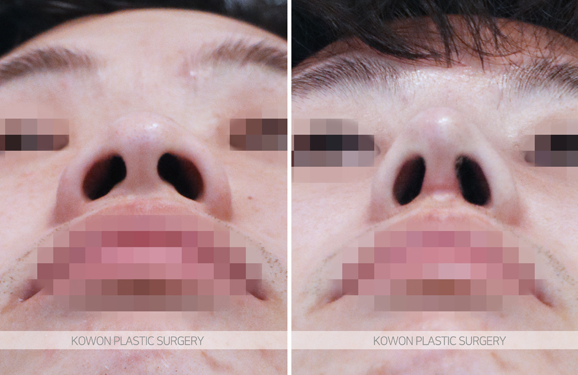
Before-and-after comparison of the same nose from below, showing the nostrils and nasal base; eyes and mouth are pixelated.
After surgery, the nasal tip, which had flared outward when viewed from below, came together into a noticeably more defined and lifted shape. From the front, the contour of the nose, which had looked wide and spread out, was tidied up, and the before-and-after alar base reduction results showed a clearer, more balanced impression. This case highlights that for a short bulbous nose with thick skin, it is important to support the nasal tip with sufficient length and firmness.
[To Summarize]
A bulbous nose cannot be reshaped simply by reducing the size of the nasal tip or alar bases alone. It is important to examine the overall structure together, from the height of the nasal bridge to the length and support of the nasal tip, and the positions of the columella and alar wings.
In particular, just because the alar bases look wide does not mean they should be reduced as much as possible. The overall proportions should be balanced by considering changes to the nasal tip and nasal bridge as well. When comparing before-and-after results of alar base reduction surgery, it is best to check not only how much the width of the alar base has decreased, but also how harmoniously the entire nose has been refined.

From consultation through surgery, I place great importance on carefully assessing each person's nasal structure and skin characteristics, and combining the necessary procedures to create a clear change without overdoing it. Based on these principles, Kowon Plastic Surgery designs surgical plans tailored to each individual's structure rather than applying just one method.
Ultimately, what matters is not applying the same method to everyone who shares the same concern about a bulbous nose. I believe that accurately identifying the structure and proportions of the nose and finding the right direction for each person is the key to a satisfying result. Kowon Plastic Surgery will continue to perform surgeries that take natural harmony and stable structure into account.
More Surgery Logs

Frequently Asked Questions
Can a bulbous nose be fixed just by reducing the alar bases?
No. Reducing the size of the alar bases alone does not create the desired shape. It is important to look at the overall structure, including the height of the nasal bridge, the length and support of the nasal tip, and the positions of the columella and alar wings.
How is the nasal tip handled in bulbous nose correction?
The nasal tip was refined by combining tip cartilage repositioning, tip cartilage suturing, and removal of soft tissue from the tip to tidy up the portion that had spread outward. Support struts were added between the tip cartilages to reduce the tip spreading out again after surgery and to secure support so the shape stays stable.
What is incisional alar base reduction?
Incisional alar base reduction is a method that directly removes skin and soft tissue to more clearly narrow the width of the alar base on each side. Because it involves incisions, the scarring and swelling at the incision sites need to be carefully monitored in the early postoperative period.
How long is the recovery period after incisional alar base reduction?
Recovery time varies from person to person, so rather than setting a fixed period, it is important to monitor progress thoroughly. Skin characteristics and recovery speed differ among individuals, so care should focus on closely checking the healing process rather than on a set timeline.
What should be compared in before-and-after alar base reduction surgery?
It is important to check not only the change in the width of the alar base, but also its proportion to the nasal tip. Rather than simply comparing the size of the alar base, it is best to look at how the balance of the entire nose has changed.
Can drooping alar wings be corrected at the same time?
Yes. In this case, the drooping alar wings were tidied up with alar lift. The alar wings were addressed in a way that balances their proportion with the nasal tip while considering their relationship with the columella. The specific approach may vary depending on each person's structure.