2026-11-12
Short, Upturned Nose Surgery: How to Keep the Nose Tip From Rising Again
Explains how surgeons decide how far to lower an upturned, short nose tip, why cartilage choice and fixation prevent rebound, and what to check before surgery.
Your nostrils are fully visible every time you smile, so you want to lower your nose tip. But will it rise back up after surgery?
People looking into upturned nose surgery often wonder both how far the nose tip can be lowered and whether the shape will last over time.
The answer varies with the strength of the nasal tip cartilage and the amount of skin slack, so it is not easy to judge from photos alone.
Today, I will explain what we look at when deciding how much to lower the nasal tip in short and upturned noses.
What exactly are an upturned nose and a short nose?
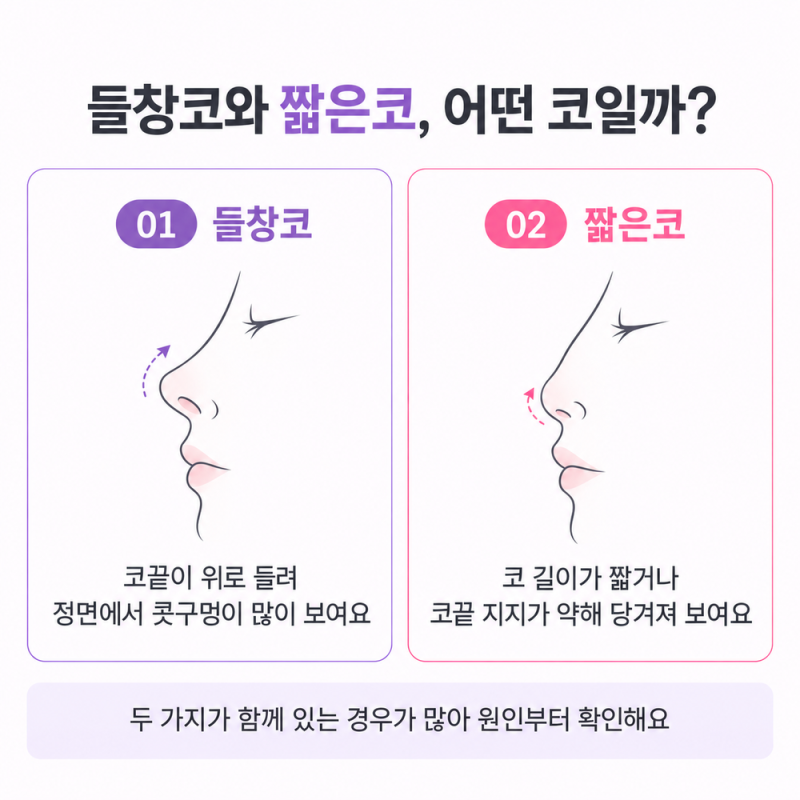
An upturned nose is one where the nasal tip points upward, so the nostrils are visible even from the front.
A short nose is one where the nose itself is short or the nasal tip lacks support, so the tip appears pulled upward.
The two often occur together. When the nose is short, the tip tends to look raised and the nostrils are more exposed.
Some people have a small or weak nasal tip cartilage from birth. A short nose can also result from scar contracture after previous nasal surgery or from tissue shrinkage due to inflammation.
For this reason, upturned nose surgery is planned by first identifying the cause of the shortened nose, not just the degree to which the tip is raised.
How is the nasal tip lowered in upturned nose surgery?
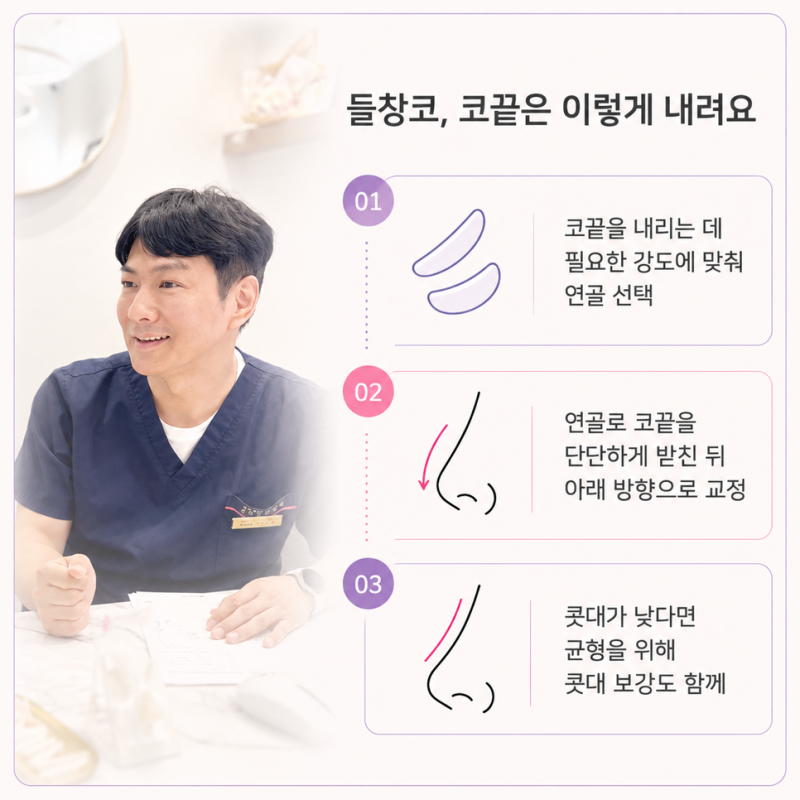
Upturned nose surgery firmly supports the nasal tip with cartilage, then lowers the raised tip downward to reduce nostril visibility.
It is less about making the nose longer and more about adjusting the direction of the raised tip to create a shape that suits the face.
The key is not only how far the tip is lowered, but also how stably the lowered tip is supported.
If the tip lacks sufficient support, it may rise again over time, so choosing the right cartilage from the start is important.
Cartilage is chosen according to the strength needed to lower the nasal tip.
After selecting the cartilage, the tip is corrected downward while being firmly supported by it.
If the nasal bridge is low, dorsal augmentation may also be performed to balance the overall appearance.
How is the cartilage for the nasal tip chosen?
The cartilage used for the nasal tip depends on how firmly it needs to be supported.
First, we check whether septal cartilage or ear cartilage is sufficient.
If the tip needs to be lowered significantly or requires stronger support, autologous rib cartilage or donor rib cartilage is considered.
In particular, autologous rib cartilage offers sufficient length and strength, making it a useful material for lowering a short, upturned tip.
Ear cartilage, on the other hand, is relatively soft, so it can be used to refine the shape of the tip or supplement areas that need support.
That said, rib cartilage is not always required for upturned nose surgery.
What matters is not which cartilage is "better," but whether it can support your nasal tip firmly at the desired position.
Does the nasal tip rise again after it has been lowered?
One of the most common concerns among people considering upturned nose surgery is whether the nasal tip will rise again.
In fact, even if the tip looks fully lowered right after surgery, it may appear to lift again if the tissues contract during recovery or if the structures supporting the tip are weak.
In particular, a short nose has skin and surrounding tissues that pull the tip upward, so simply placing cartilage may not be enough.
Therefore, after lowering the tip, where and how the cartilage is fixed is crucial.
If the shape right after surgery is satisfying but the tip rises again over time, it is understandably disappointing.
In addition to how far the tip can be lowered from the start, it is important to consider how the corrected position can be stably maintained.
How far can the tip of a short nose be lowered?
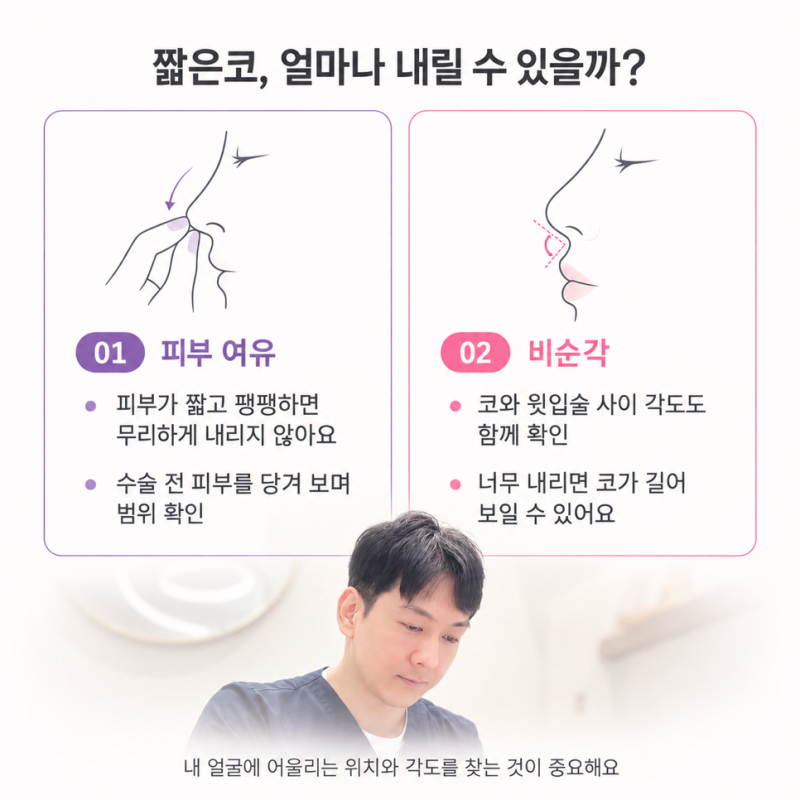
Not everyone with a short nose can lower the tip as much as they wish.
How far the tip can be lowered depends on how much room the skin and surrounding tissues have.
For patients with short, tight skin, forcing the tip down may put stress on it. Before surgery, we pull the skin directly to see how far correction is feasible.
It is also necessary to check the nasolabial angle, which is the angle between the nose and the upper lip.
Lowering the tip significantly does not always produce a good result.
Lowering it too far can make the nose look longer or unnatural with the face.
Even with the same upturned nose, skin laxity and the condition of the tip differ, so it is important to find the position and angle that suit your face.
What does recovery after upturned nose surgery look like?
The recovery process varies slightly depending on the cartilage used and the extent of the surgery.
Timing | Recovery Process |
Day 3 | Showering is allowed if rib cartilage was used |
Day 5 | Suture removal (Day 7 if rib cartilage was used) |
Recovery period | Avoid touching the nasal tip or blowing your nose. If ear cartilage was harvested, avoid using earphones in that ear. |
While the lowered nasal tip settles into place, it is best to minimize actions that put pressure on the tip.
What should you check when considering upturned nose surgery?
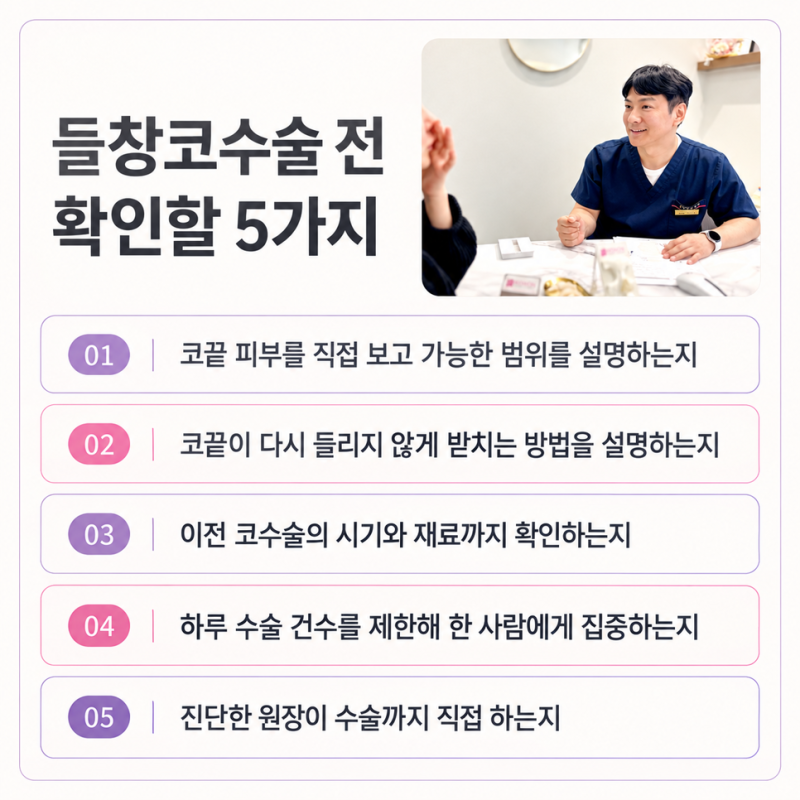
Upturned nose surgery requires considering cartilage selection, tip fixation, skin laxity, and the nasolabial angle all together.
That is why the deciding factor is not how far the tip can be lowered, but whether the surgeon can explain why it should be lowered that much.
• Whether the surgeon directly examines the nasal tip skin and explains the feasible range |
• Whether the surgeon explains how the nasal tip will be supported so that it does not rise again |
• Whether, if you have had previous nasal surgery, the surgeon checks the timing and materials used |
• Whether the surgeon limits the number of surgeries per day to focus on each patient |
• Whether the doctor who makes the diagnosis also performs the surgery personally |
Once you start noticing your nostrils showing, you may find yourself worrying about your head angle in every photo. Even after deciding on surgery, the fear of it rising again may come first.
I believe that keeping the lowered tip in place over the long term matters more than how far it is lowered.
And that range is ultimately determined by the patient's skin and facial balance.
I hope this article helps those struggling with a short or upturned nose establish criteria that fit their own nose.
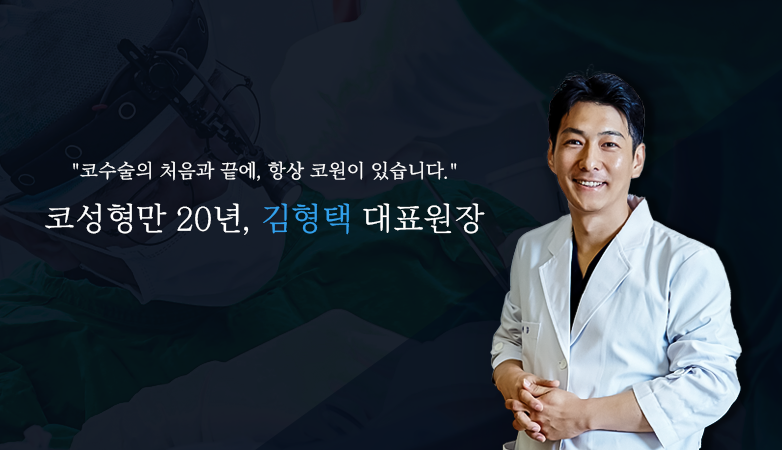
Director Kim Hyung-taek, Kowon Plastic Surgery Clinic |
Let us help you find a nose that suits your face |


Frequently Asked Questions
What is the difference between an upturned nose and a short nose?
An upturned nose is one where the tip points upward, so the nostrils are visible even from the front. A short nose is one where the nose itself is short or the tip lacks support, so it appears pulled upward. The two often occur together.
How far can the nasal tip be lowered in upturned nose surgery?
How far the tip can be lowered depends on the amount of room in the skin and surrounding tissues, so it is not possible for everyone to lower it as much as they want. Before surgery, the skin is pulled directly to assess how much correction is feasible. Lowering the tip too far can make the nose look longer or unnatural with the face.
Can the nasal tip rise again after surgery?
Yes. If the tissues contract during recovery or the structure supporting the tip is weak, the tip may appear to rise again. In a short nose, the skin and surrounding tissues pull the tip upward, so simply placing cartilage may not be enough. Where and how the cartilage is fixed is important.
Is rib cartilage always required for upturned nose surgery?
No, rib cartilage is not always required. First, the surgeon checks whether septal cartilage or ear cartilage is sufficient. If the tip needs to be lowered significantly or requires stronger support, autologous rib cartilage or donor rib cartilage may be considered.
How long is the recovery period after upturned nose surgery?
Sutures are removed on day 5, although the recovery period varies slightly depending on the cartilage used and the extent of the surgery. If rib cartilage was used, sutures are removed on day 7. During recovery, it is best to avoid touching the nasal tip or blowing your nose.
What should I check when considering upturned nose surgery?
Check cartilage selection, tip fixation, skin laxity, and the nasolabial angle together. Look for whether the surgeon explains how the tip will be supported so it does not rise again and, if you have had previous nasal surgery, whether they check the timing and materials used.