2026-09-30
Long Nose Rhinoplasty: Kowon Plastic Surgery's Expertise in Correcting Hump Nose and Crooked Nose Simultaneously
Learn how Kowon Plastic Surgery corrects long noses, dorsal humps, and crooked septums simultaneously, achieving structural stability and natural facial harmony.
Hello, I am Dr. Kim Hyung-taek, Director of Kowon Plastic Surgery.
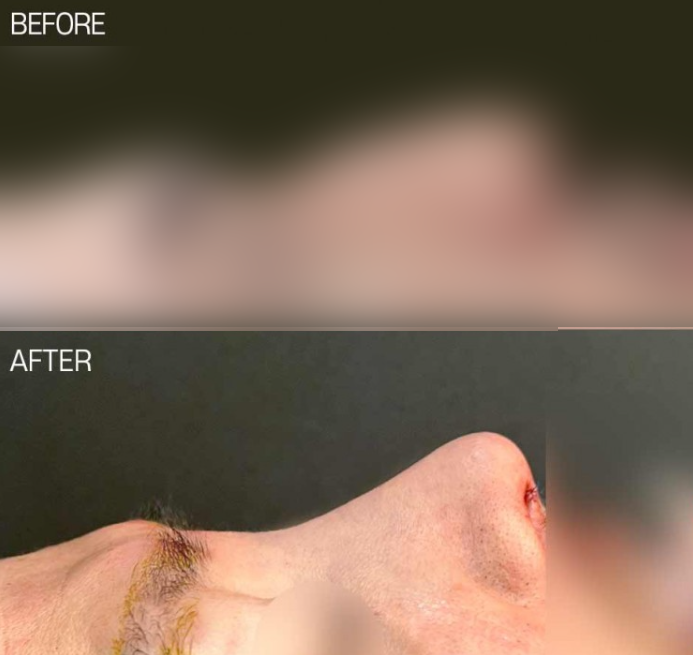
Today, I would like to share a case of a male patient who needed long nose rhinoplasty due to a protruding dorsal hump combined with a drooping nasal tip that made his overall nose look overly elongated. Because of this nasal shape, he was distressed by his appearance, which looked somewhat dark and overly sharp.
In addition, he presented with a complex case of a deviated (crooked) nose and a deviated nasal septum. This resulted not only in external aesthetic asymmetry, but also in functional discomfort, such as nasal obstruction and breathing difficulties.
"The key to long nose rhinoplasty is not merely rasping down the protruding hump, but simultaneously realigning the central nasal axis while readjusting the length and angle of the drooping nasal tip."
First, we smoothly contoured the uneven dorsal line to create a straight, refined, and confident profile tailored to enhance masculine charm.
The drooping nasal tip was repositioned through cartilage repositioning and cartilage suturing (binding) into a more three-dimensional and natural position. A robust internal cartilage strut was reinforced to ensure the shape would not deform even with the passage of time.
"When elevating a drooping nasal tip, the most critical step is building a sturdy internal cartilage strut to create a stable structural foundation, preventing the tip from sagging again over time."
While stably readjusting the proportions of the excessively long-looking nose, we also straightened the deviated internal septal cartilage, providing relief from chronic nasal congestion.
By three-dimensionally refining the nasolabial angle where the nose meets the upper lip and philtrum, we helped him achieve balanced, well-defined facial features from every angle.
[Related Case]
Let me also share the surgical journey of another patient who visited us with similar concerns.
This patient also had an elongated nasal profile where the tip pulled downward whenever they smiled, causing facial disproportion and a somber, gloomy expression.

In such cases, Kowon Plastic Surgery first performs a correction that moderately regulates the tension of the facial expression muscles pulling the nasal tip downward.
Next, we utilized septal cartilage to establish a strong tip strut, creating refined definition, and applied specialized long nose rhinoplasty techniques to achieve a natural, balanced nasolabial angle between the nose and the philtrum.
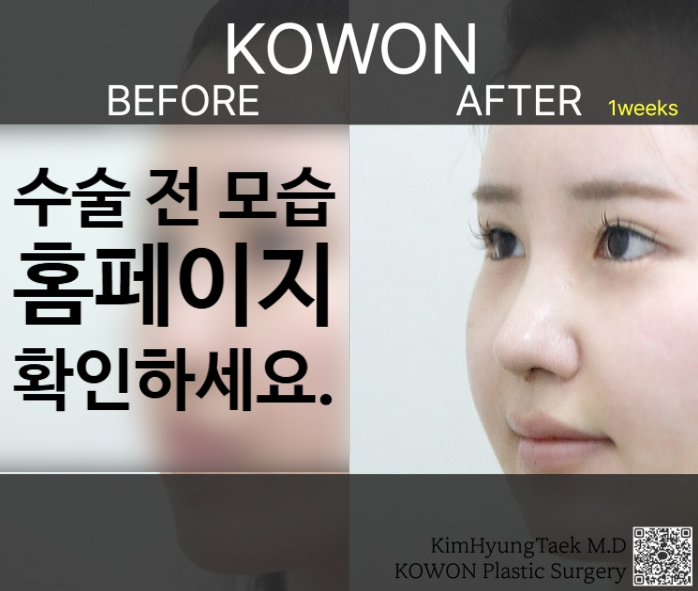
As a result, the mid-face proportion—which previously appeared elongated—became noticeably shorter and neater, achieving a smooth profile that prevents the nasal tip from sagging during facial expressions.
By correcting both the drooping tip angle and the nasolabial angle simultaneously, this was a highly satisfying case that transformed the patient's appearance into a much brighter, more three-dimensional look from both frontal and profile views.
Long-lasting satisfaction is only possible when surgery goes beyond cosmetic changes to deeply analyze and correct internal nasal structure, respiratory function, and dynamic facial expressions.
When an elongated nose, dorsal hump, and deviation occur simultaneously, it is difficult to achieve satisfying outcomes simply by refining the external appearance. Long nose rhinoplasty must fundamentally correct the nasal axis through precise analysis of internal structures, functional aspects, and individual facial muscle movements to maintain lasting beauty over time.
At Kowon Plastic Surgery, backed by extensive clinical experience and know-how, we go beyond cosmetic refinement to discover the most natural, sophisticated lines that harmonize with overall facial proportions while restoring easy breathing. Stop worrying and complete your confident transformation through our tailored 1:1 solutions.
Frequently Asked Questions
How do you prevent the nasal tip from drooping again after long nose rhinoplasty?
A sturdy internal strut must be created using septal cartilage. After cartilage repositioning and suturing, reinforcing a durable cartilage support ensures that the nasal tip maintains its stable shape and does not collapse or droop over time.
Can breathing difficulties also be improved when a crooked nose is accompanied by a deviated septum?
Yes, nasal congestion can be improved together. Straightening both the externally crooked nose and the internal deviated septal cartilage aligns the nasal axis, effectively resolving stuffiness and improving airflow.
Can the downward pulling of the nasal tip while smiling be corrected?
Yes, it can be corrected through facial expression muscle regulation. By adjusting the dynamic muscles that pull the tip downward and reinforcing the tip structure with a septal cartilage strut, the tip will not sag when smiling or making expressions.
Why is refining the nasolabial angle important when correcting a hump nose and a long nose?
It is vital for achieving balanced facial proportions and a well-defined appearance. Refining the nasolabial angle where the columella meets the philtrum visually shortens an elongated mid-face and delivers natural harmony from both the front and profile views.