2026-11-20
Contracture Revision Rhinoplasty for a Lifted, Hardened Nose Tip: The Appeal of RIBFIT Without Silicone
Explains how capsular contracture after rhinoplasty lifts and stiffens the nose tip, and why RIBFIT uses the patient's own rib cartilage instead of silicone in revision surgery.
[Table of Contents]
1. What Is Contracture After Rhinoplasty?
2. Causes of Nasal Contracture
3. Is It Better to Use Autologous Rib Cartilage in Revision Surgery?
4. Natural Results with RIBFIT Rhinoplasty!
5. Who RIBFIT Is Recommended For
Hello, I am Hyeong-taek Kim, chief director of Kowon Plastic Surgery Clinic.
Quite a few people go through emotional distress because, as time passes after their first surgery, the tip of their nose gradually lifts and hardens.
If internal inflammation and scar tissue pull on the surrounding soft tissue and distort the shape of the nose, contracture revision surgery should be carefully considered. It goes beyond simple cosmetic correction to restore both function and structure.
1. What Is Contracture After Rhinoplasty?
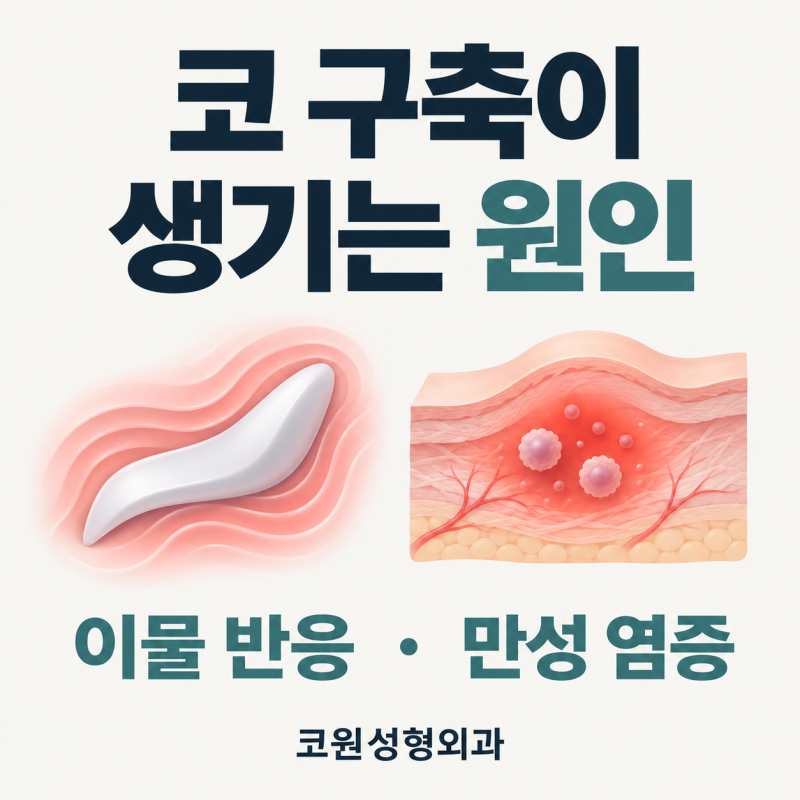
Contracture after rhinoplasty is a condition in which the “capsule” that forms around an implant becomes abnormally thick and strongly pulls the surrounding skin and cartilage inward.
As a result, the nose becomes shorter, the nostrils look upturned, and the nasal tip becomes hard and stiff, no longer moving.
If adhesions and deformation have already progressed, contracture revision surgery is needed to carefully release the internal tissues so that the skin can stretch sufficiently.
2. Causes of Nasal Contracture
Having performed revision surgeries for more than 20 years, the main causes I have observed are foreign body reactions to implants and chronic inflammation.
When low-grade inflammation persists for a long time, the capsule tends to contract. Contracture can also occur when excessive elevation of the nasal tip impairs blood circulation in the skin, or when repeated surgeries within a short period damage the internal tissues.
To reduce the risk of recurrence, the cause must be accurately identified so that a systematic contracture revision plan can be developed.
3. Is It Better to Use Autologous Rib Cartilage in Revision Surgery?
In a nose with contracture, the internal cartilage has been depleted or weakened, so reusing an artificial implant carries a high risk of recurrent inflammation.
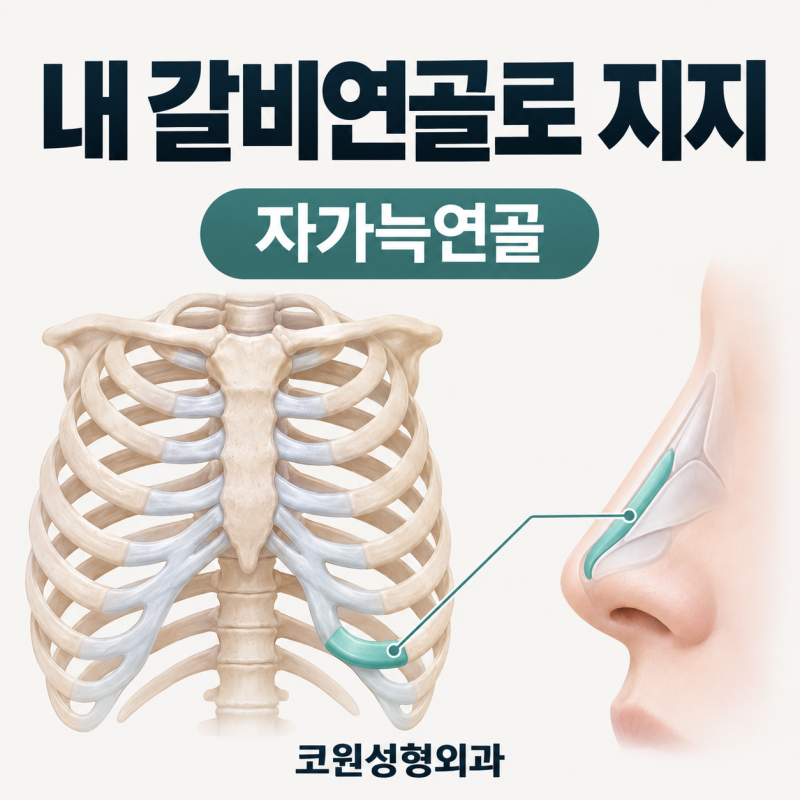
The material that offers the strongest support and can be secured in sufficient quantity is your own rib cartilage.
Because it is your own tissue, its graft survival rate is high, and it has a strong ability to hold up the contracted skin from underneath.
However, the conventional method of placing a solid cartilage block as is has drawbacks, such as warping of the cartilage over time and a hard feel to the touch.
4. Natural Results with RIBFIT Rhinoplasty!

That is why I perform the RIBFIT procedure, which aims to achieve both the safety of autologous tissue and the precise, sculpted lines that implants provide.
The procedure uses an autologous tissue implant that completely replaces silicone. Your own rib cartilage is finely milled into micro-particles and then compressed into a nose-shaped mold.
Because there is no silicone, there is less concern about foreign body reactions and show-through. Compressing the cartilage into particles also compensates for the warping seen with solid cartilage.
There are two versions: “Basic,” in which a standard mold is used and I carve the graft by hand, and “3D Custom,” in which a custom mold is made from CT data.
In both versions, the graft settles softly and naturally, just like your own original tissue.
5. Who RIBFIT Is Recommended For
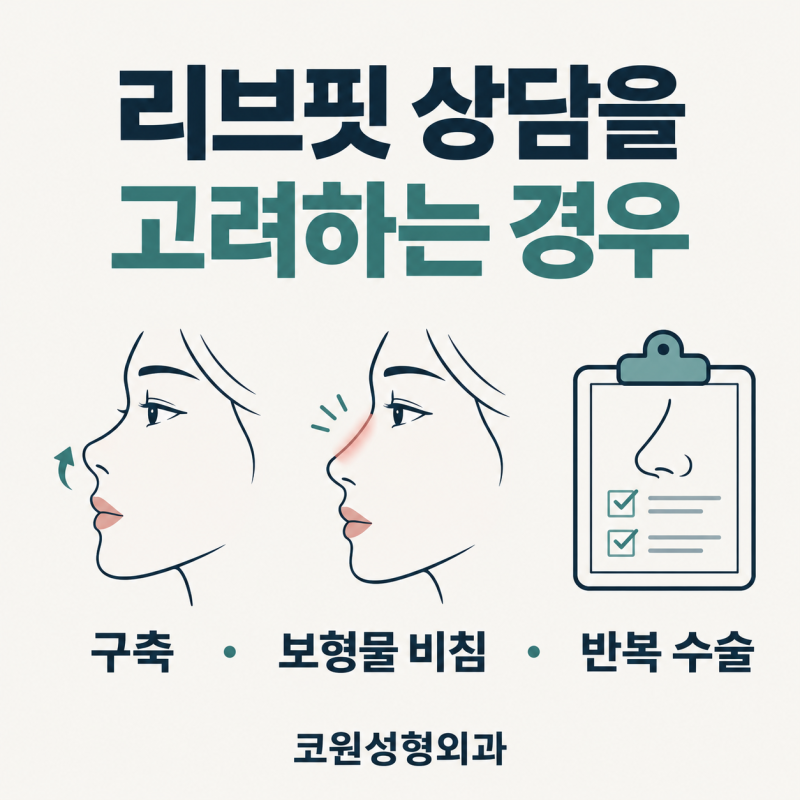
Those who have experienced inflammation or capsular contracture from artificial implants and are preparing for contracture revision surgery with a safer material
Those with thin skin, where existing implants show through or the edges become visible, and who want a more natural improvement
Those whose cartilage and skin have weakened after multiple surgeries and who need both a sturdy support and a soft nasal bridge
Those who feel averse to silicone but are concerned about the bulkiness and absorption rate of conventional autologous dermal grafts or simple cartilage granules
To briefly summarize today’s content,
1. Nasal contracture is a condition in which the nasal tip lifts and hardens due to capsular contraction and inflammation around an implant.
2. To prevent recurrence, autologous rib cartilage, which offers excellent support and engraftment, is more advantageous than artificial implants.
3. The RIBFIT procedure uses micro-particulate autologous rib cartilage implants to reduce warping and foreign-body sensation, creating natural contours.
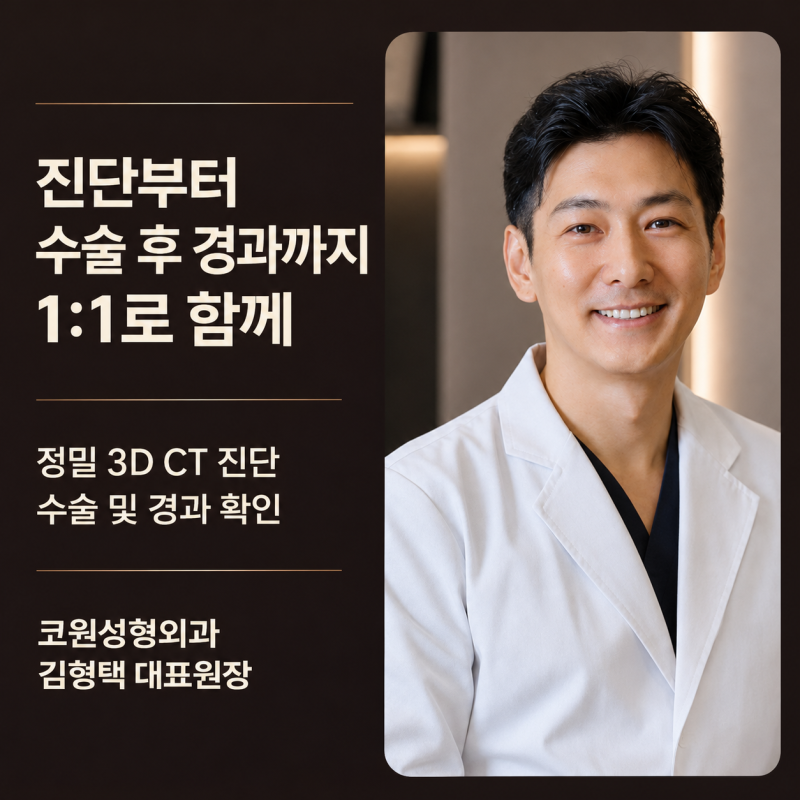
At Kowon Plastic Surgery, I personally take one-on-one responsibility for every step, from precise 3D CT diagnosis and surgery to postoperative follow-up.
Having already gone through one painful experience, I hope you make a wise choice that protects both safety and natural results, and that you regain your everyday comfort. Thank you.

Frequently Asked Questions
What is contracture after rhinoplasty?
Contracture after rhinoplasty is a condition in which the “capsule” that forms around an artificial implant becomes abnormally thick and pulls the surrounding skin and cartilage inward. As a result, the nose shortens, the nostrils look upturned, and the nasal tip becomes hard and stiff, no longer moving.
Why does nasal contracture occur?
The main causes are foreign body reactions to implants and chronic inflammation. Prolonged low-grade inflammation makes the capsule prone to contracting. Contracture can also develop when excessive elevation of the nasal tip impairs blood circulation in the skin, or when repeated surgeries within a short period damage the internal tissues.
Is it better to use autologous rib cartilage in contracture revision surgery?
The article explains that in revision surgery for a nose affected by contracture, one’s own rib cartilage is more advantageous. Reusing artificial implants when the cartilage is weakened carries a high risk of recurrent inflammation. Rib cartilage, being one’s own tissue, has a high graft survival rate and a strong ability to support the contracted skin.
Does RIBFIT surgery use silicone?
No, RIBFIT is a silicone-free method. It uses an autologous tissue implant made by milling your own rib cartilage into micro-particles and compressing them into a nose-shaped mold. Because there is no silicone, there is less concern about foreign body reactions and show-through.
What versions of RIBFIT surgery are available?
RIBFIT comes in two versions: “Basic” and “3D Custom.” Basic uses a standard mold, after which the surgeon carves the graft by hand. 3D Custom creates a custom mold based on CT data.
Who is RIBFIT recommended for?
Recommended candidates include those who have experienced inflammation or capsular contracture from artificial implants, those with thin skin where implants show through, and those whose cartilage and skin have weakened after multiple surgeries. Also included are people who feel averse to silicone but are concerned about the bulkiness and absorption rate of conventional autologous dermal grafts or simple cartilage granules.