2026-10-01
Columella Lowering: Why We Must Examine the Nasolabial Angle and Alar Rim
Understand why an invisible columella may be caused by retraction or sagging alar rims, and how examining the nasolabial angle ensures natural rhinoplasty results.

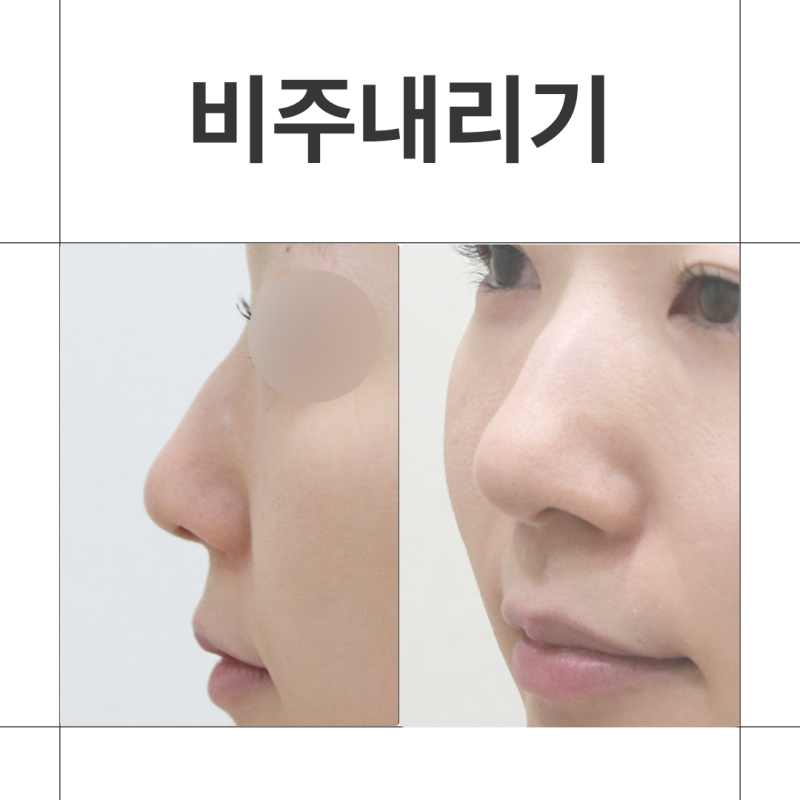
From the profile view, the columella between my nostrils is barely visible. Would columella lowering fix this?
When concerned about a nose tip appearing short or blunt, looking closely at your side profile might reveal that the columella is obscured by the alar rims and barely visible.
Because of this, many people assume that lowering the columella slightly will solve the problem.
However, the issue is that an invisible columella does not always mean a columella lowering procedure is necessary.
This is because while some cases involve a retracted columella where the structure itself is sunken, other cases are caused by sagging alar rims (alar hooding) covering the columella.
Let us look into why the corrective methods differ despite looking similar on the surface, and what needs to be evaluated first in your nose.
Is columella lowering necessary if the columella is not visible from the side?
Columella lowering is not determined solely based on whether the central nasal column is poorly visible from the side profile.
The columella is the pillar-like structure supporting the underside of the nasal tip between both nostrils.
If this area is retracted inward, the nose can appear short, blunt, or flat at the tip.
Conversely, even if the columellar position is normal, drooping alar rims can create a very similar visual effect.
The drooping alar rims cover the central pillar, making it appear relatively short.
Therefore, before any correction, it is essential to first differentiate whether the cause lies in the central pillar itself or the alar rims.
What is the difference between a retracted columella and sagging alar rims?
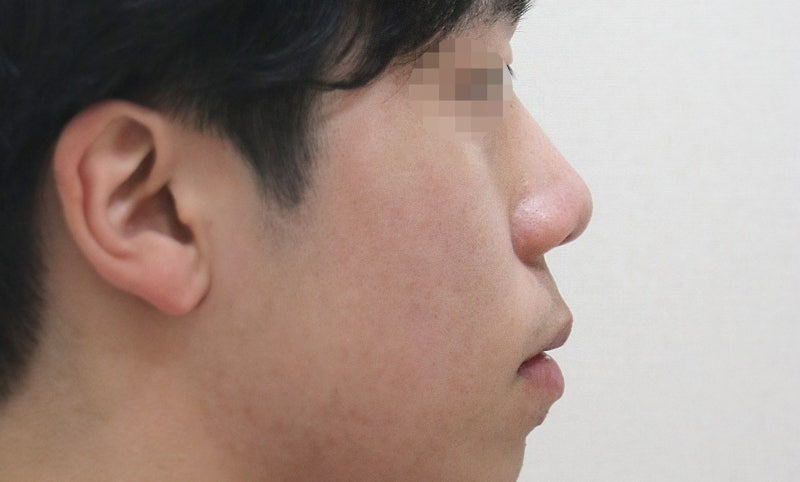
A retracted columella refers to a condition where the central pillar below the nasal tip is physically pulled or sunken inward.
Sagging alar rims, on the other hand, stem from the positioning of the lateral nostril rims rather than the central pillar.
While both conditions make the central pillar appear missing from a side profile, the target area for correction is entirely different.
Classification | Retracted Columella | Sagging Alar Rims (Alar Hooding) |
Problematic Area | Columella | Lateral Alar Rims |
Visual Presentation | Central pillar appears sunken inward | Appears shortened due to obstruction by the alar rims |
Correction Method | Support the columella to project it outward/downward | Reposition the drooping alar rims upward |
In cases of a retracted columella, we consider techniques to support and project the area forward and downward.
On the other hand, if the central pillar is in a normal position but the alar rims are sagging, we consider repositioning the alar rims upward to balance both sides.
This is why the clinical approach differs depending on which structure is situated lower, even if the side view looks similar.
Does columella lowering involve treating only a single area?
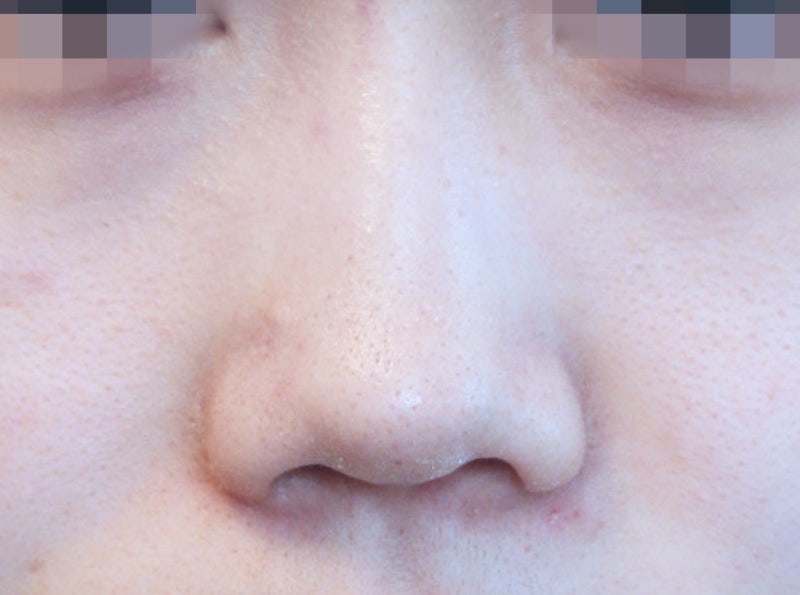
If a retracted columella is the cause, the columella is often addressed alongside tip projection and refinement.
Conversely, if drooping alar rims are the primary cause and only the columella is adjusted, the rims will remain low, leaving an outcome that deviates from the desired shape.
Columella lowering must take into account the relationship between the nasal tip, the alar rims, and the central pillar.
With over 20 years of clinical experience specializing in rhinoplasty, I have found that even noses appearing similar from the outside can have vastly different reasons for a hidden columella.
Because the cause could be an intrinsically retracted columella or drooping alar rims, the precise anatomical cause must be identified before simply deciding to lengthen the columella.
Is columella lowering necessary if the nasolabial angle is acute?
The nasolabial angle is the angle formed between the base of the nose and the upper lip.
While it serves as a reference when evaluating the profile, columella lowering is not determined based solely on this angle.
This is because the reasons why a columella is poorly visible can vary significantly.
The columella itself might be retracted, or the alar rims may be hanging down and obscuring it.
Additionally, the positioning of the nasal tip can also alter the lateral appearance.
Therefore, rather than aiming for a specific nasolabial angle, the primary objective should be identifying why the columella is hidden.
Whether to adjust the columella's position directly or simultaneously evaluate the tip and alar rims depends entirely on that underlying cause.
Is it always better to lower the columella as much as possible?
Columella lowering is not about extending the structure as far down as possible; rather, it is about harmonizing the relative positions of the alar rims and the columella.
Typically, the columella is positioned approximately 1 to 2 mm lower than the alar rims.
This relationship creates an aesthetically pleasing gull-wing line from the frontal view and allows the columella to show naturally from the side.
However, if the nose is already long, lowering the columella further can make the overall nose appear excessively elongated.
Therefore, while using the 1–2 mm relationship as a standard guideline, the degree of lowering must be decided by assessing current nasal length, tip morphology, and overall facial balance.
Even a tiny millimeter difference in the nose can have a substantial visual impact on the entire face.
If you have felt bothered by a hidden columella or a blunt, crowded nasal tip every time you look in the mirror, your attention was likely focused primarily on that spot.
Even so, lowering the columella excessively is never the answer.
It is about finding the true anatomical reason behind the unsatisfactory aesthetic,
and determining the degree of change that allows the nasal tip and alar rims to harmonize naturally.
Ultimately, the key to columella lowering is not “how much further down,” but “how well it suits you.”

Dr. Hyoung-Taek Kim, Chief Director of Kowon Plastic Surgery |
Finding the Nose That Complements Your Unique Facial Features |


Frequently Asked Questions
Is columella lowering mandatory if the columella isn't visible from the side?
Not necessarily. It is critical to first accurately diagnose whether the hidden columella is caused by an intrinsically retracted columella or by drooping alar rims that cover it, and then apply the appropriate surgical approach.
How do you distinguish between a retracted columella and sagging alar rims?
They differ distinctly in anatomical location and morphology. A retracted columella is a condition where the central nasal pillar itself is pulled inward, while sagging alar rims involve normal central pillar anatomy covered by drooping lateral nostril rims. These are corrected via columellar support and alar rim repositioning, respectively.
Should the columella always be lowered if the nasolabial angle is narrow?
No, the nasolabial angle measurement alone does not dictate columella lowering. It is merely a reference point. The decision requires a comprehensive diagnosis of whether the obstruction originates from the columella, alar rims, or tip projection.
Does lowering the columella more produce better cosmetic results?
No, lowering the columella excessively is discouraged. Generally, having the columella sit 1 to 2 mm below the alar rim achieves a natural gull-wing aesthetic. For already long noses, excessive columella lowering can make the nose look disproportionately elongated.