2026-11-23
Arrow Nose Surgery: Why Do Long or Drooping Noses Droop More When Smiling? Why Muscle Correction Matters Too
Arrow nose surgery depends on more than tip height. This guide explains why tip support, smile-related muscle movement, and the nasolabial angle must be checked together.
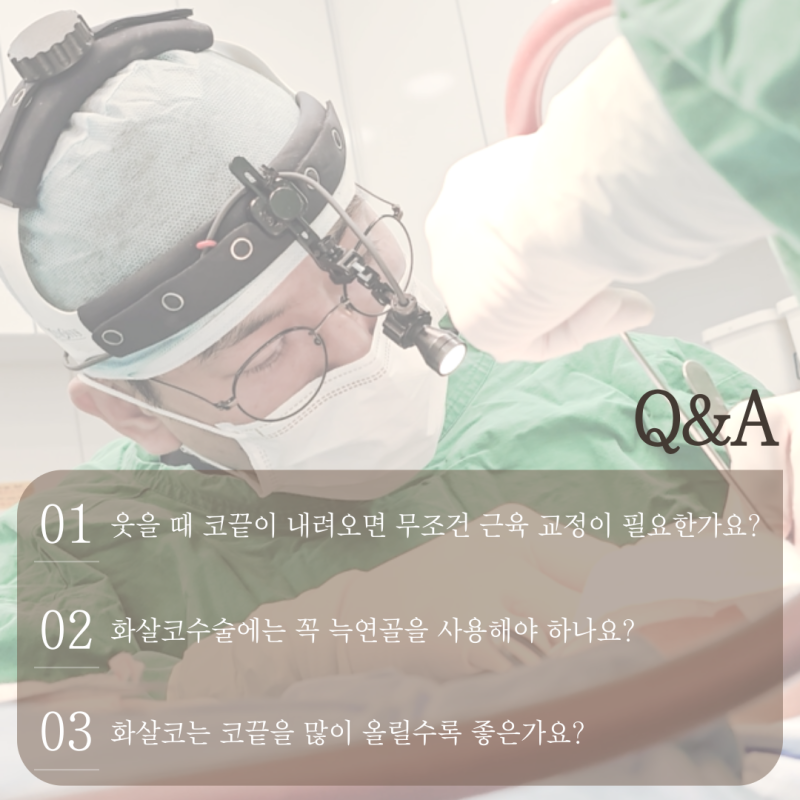

Cover: Arrow nose surgery – why do long, drooping noses dip further when smiling, and why muscle correction matters too?
Even at rest, my nose already looks long, but when I smile, the tip seems to droop even lower.
When I talk with people considering arrow nose surgery, I often hear this concern.
Some people look as though they have a long nose even when their face is at rest, with the tip pointing downward. Others look fine most of the time, but their drooping nose becomes more noticeable when they smile or talk.
They may look similar from the outside, but the structures responsible for the downward pull of the nose tip can differ.
That is why it is hard to decide the scope of surgery based only on how much the nose tip needs to be raised.
Today, I will explain why arrow nose surgery requires evaluating support strength, muscle function, and nose tip angle together.
Why is it difficult to judge arrow nose correction by simply raising the nose tip?
An arrow nose is hard to view as simply a matter of repositioning a nose tip that already points downward.
This is because the position of the cartilage supporting the nose tip, along with surrounding structures including the nasal septum, can influence the drooping shape.
The condition of the skin and tissue around the nose tip also needs to be checked.
Over more than 20 years of treating nose surgery patients, I have found that even arrow noses that look alike often require checking different things.
Some cases lack support strength at the nose tip, while in others, a downward pulling force during smiling is also at work.
So I do not settle on a single method based only on the drooping appearance.
In particular, when a long nose and a drooping tip appear together, I do not look only at the frontal view. I also check the tip position and nasolabial angle from the side.
In other words, arrow nose surgery is less about asking "how much should we raise it?"
and more about first identifying "what is causing the nose tip to point downward?"
If the nose tip drops further when you smile, the muscles also need to be checked.
If the nose tip drops noticeably more when smiling or speaking animatedly than when at rest, the movement of the muscles should also be examined.
Beneath the nose tip is a muscle called the depressor septi nasi.
This muscle helps move the nose tip downward when making facial expressions.
When this movement is pronounced, the drooping of the nose tip may become more noticeable when smiling.
That is why, during consultations, I do not look only at the static appearance.
I ask patients to smile and speak, and then check how much the nose tip position changes compared to their resting expression.
1. Nose Tip Position at Rest |
The tip droops clearly even at rest → Check the structures supporting the nose tip first |
2. Movement with Facial Expressions |
The tip drops further when smiling or speaking → Also evaluate the influence of the muscles |
3. When Both Are Present |
The tip droops at rest and drops further when smiling → Evaluate structure and movement together |
Put simply, support strength is about how the nose tip is held up, while the muscles are related to the force that pulls the nose tip downward when smiling or speaking.
What determines the arrow nose surgery method?
Based on the causes identified above, I decide how far the correction should actually extend.
1. Nose Tip Support |
The nose tip requires substantial support → Determine the support method needed and the cartilage to be used together |
2. Movement with Facial Expressions |
The nose tip drops noticeably when smiling → Additionally assess whether muscle correction is needed |
3. Angle Between the Nose Tip and Upper Lip |
The nose tip needs to be raised → Also check the nasolabial angle and how much the nostrils show |
How far the nose tip should be raised is not decided by height alone.
Because the degree of rotation can change how much the nostrils show and how the nose tip looks, I also examine the relationship between the nose tip and the upper lip.
Ultimately, what matters is determining the scope of arrow nose correction by evaluating support strength, muscle movement, and nose tip angle individually, then matching the plan to the current condition.
Q&A
Q1. If the nose tip drops when I smile, does it always require muscle correction?
Not necessarily. If the nose looks fine at rest but the drooping becomes noticeable when smiling, the influence of the muscles can be assessed. Conversely, if the nose tip droops even at rest, I examine the support structures as well before deciding whether muscle correction is needed.
Q2. Is rib cartilage always required for arrow nose surgery?
No, the same material is not needed in every case. The material is determined after evaluating the level of support the nose tip requires and the condition of the existing cartilage. When necessary, options such as autologous rib cartilage or donor rib cartilage may be considered.
Q3. Is it better to raise the nose tip as much as possible for an arrow nose?
Raising it a lot is not a standard in itself. The nasolabial angle between the nose tip and upper lip, and how much the nostrils show, must be considered together. Even for the same arrow nose, the appropriate range can vary depending on the shape of the current nose and face.
If your arrow nose is bothering you,
it is easy to start by asking, “How much should it be raised?”
However, if your appearance differs between rest and smiling, it is hard to pinpoint the cause of the drooping from photos alone.
Only by checking both the support of the nose tip and its movement with expressions can we determine which areas need attention, including whether muscle correction is needed.
Likewise, rather than choosing the surgical method based on a single criterion, it is important to make a decision based on the overall condition of the current nose.
Dr. Kim Hyung-taek, Director, Kowon Plastic Surgery Clinic |
Let's design a nose that suits your face together |


Frequently Asked Questions
Does the nose tip always need muscle correction if it drops when smiling?
Not necessarily. If the nose looks fine at rest but the drooping becomes noticeable when smiling, the influence of the muscles can be assessed. If the nose tip also droops at rest, I examine the support structures as well before deciding whether muscle correction is needed.
Is rib cartilage always required for arrow nose surgery?
No, the same material is not needed in every case. The material is chosen after evaluating the level of support the nose tip requires and the condition of the existing cartilage. When necessary, autologous rib cartilage or donor rib cartilage may be considered.
Is it better to raise the nose tip as much as possible for an arrow nose?
No. Raising it a lot is not a standard in itself. The nasolabial angle between the nose tip and upper lip, and how much the nostrils show, must be considered together. Even for the same arrow nose, the appropriate range can vary depending on the shape of the current nose and face.
What is checked before arrow nose surgery?
Support of the nose tip, movement with facial expressions, and the angle between the nose tip and upper lip are all evaluated together. When a long nose and a drooping tip appear together, I examine the tip position and nasolabial angle from the side as well as from the front.
What does the depressor septi nasi muscle do?
It is a muscle that helps move the nose tip downward when making facial expressions. When this movement is pronounced, the drooping of the nose tip may become more noticeable when smiling. During consultations, I have patients smile or speak and then check how the position changes.